
Massage Therapist Salary in Texas: How Much Can You Really Earn?

We may earn money or products from the companies mentioned in this post.
If you’re thinking about massage therapy as a career, you’ve probably already asked the big question:
How much do massage therapists make in Texas?
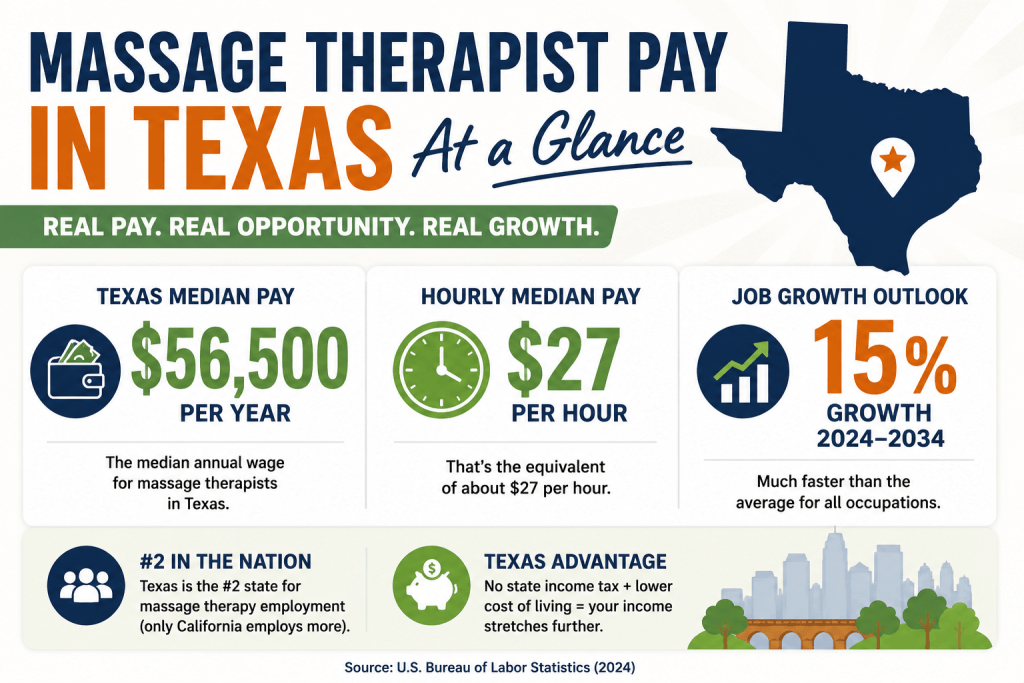
Short answer: the median is about $56,500 per year — roughly $27 per hour — according to the U.S. Bureau of Labor Statistics. And the field is growing 15% through 2034, much faster than the average career.
But real-world massage incomes range from $35,000 to $80,000 and beyond. This guide breaks down exactly what makes the difference.
Key Takeaways
- Texas median pay: ~$56,500/year (~$27/hour) per BLS data
- Job growth: 15% from 2024–2034 — much faster than average
- Biggest pay factors: work setting, employee vs. self-employed, specialization, and rebooking skills
- Texas bonus: no state income tax + lower cost of living = your income stretches further
How Much Do Massage Therapists Make in Texas?
The Texas median is about $56,500 per year, and only California employs more massage therapists than Texas.
Here’s the official picture from the Bureau of Labor Statistics:
- Texas median pay: ~$56,500/year (~$27/hour)
- National median pay (2024): $57,950/year
- Projected job growth (2024–2034): 15% — much faster than average
- Texas market: the #2 state in the nation for massage therapy employment
One more Texas advantage: no state income tax, and a cost of living below the national average in most of the state. A massage income goes further in Central Texas than the same paycheck would in many other states.
Why Massage Therapist Salaries Vary So Much
The official numbers only count employed therapists — they leave out the self-employed and most tip income. That’s why you’ll meet therapists earning $35,000 and therapists earning $80,000+ with the same license.
Six factors decide where you land:
1. Where You Work
Spas, clinics, franchises, and private practice all pay differently — full breakdown in the next section.
2. Employee vs. Self-Employed
Employees get steady bookings and a built-in front desk, but the business keeps a share of each session. Self-employed therapists keep more per session and cover their own expenses. Many Texas therapists do both.
3. How Many Sessions You Work
Massage is physical work — most full-timers do 15–25 hands-on hours per week, not 40. Therapists with good body mechanics and self-care habits sustain more sessions for more years.
4. Tips
In spa and franchise settings, tips commonly add 15–20% on top of base pay. A $25/hour service rate can take home considerably more.
5. Specialization
Deep tissue, prenatal, sports, trigger point, and oncology massage all command higher rates — and clients who rebook. Specialization is the most reliable way to raise your prices over time.
6. Location Within Texas
Big metros charge higher session rates but face higher rent and more competition. Smaller markets like Brownwood and the Central Texas area mean lower overhead and loyal repeat clients — which makes private practice especially viable here.
Massage Therapist Pay by Work Setting
Where you work shapes what you earn. Here’s the honest picture for each path.

Day Spas & Resort Spas
Steady bookings, built-in clientele, tips on top. The most common first job for new graduates and a great place to build speed and confidence.
Franchise Massage Studios
Modest base pay per session, but high volume, consistent schedules, and steady tips. Many therapists start here to build hands-on hours fast.
Clinical & Medical Settings
Chiropractic, physical therapy, sports rehab, and pain management typically pay more per hour than relaxation settings — the work demands stronger anatomy and assessment skills.
Mobile & On-Site Massage
Premium rates for convenience, often well above in-office prices. You cover travel and equipment, but per-session income can be excellent for self-starters.
Private Practice
The highest earning potential — and the most responsibility. You set your rates and keep what you earn after expenses. Success depends as much on business skills as massage skills, which is why business training is built into every TDLR-licensed program.
The Combination Approach
Many successful Texas therapists mix paths: spa shifts for steady income, private clients on the side, a specialty that fills the calendar by word of mouth. See all the options in our guide to massage therapy career paths.
Can You Really Make a Living as a Massage Therapist in Texas?
Yes — thousands of Texans do. But the therapists who earn the most share the same habits:
- They rebook clients consistently
- They protect their bodies with good mechanics and self-care
- They keep learning through continuing education
- They treat their practice like a business — even as employees
We’ve gone deeper on what long-term success looks like in our post: Can You Make a Living as a Massage Therapist?
How TMA Prepares Students to Earn
Higher-earning therapists are made in training — not after it. The 500-hour TDLR-licensed program at Texas Massage Academy in Brownwood covers:
- Hands-on Swedish and therapeutic technique for any work setting
- Anatomy, physiology, kinesiology, and pathology — the foundation for higher-paying clinical work
- Business practices, documentation, and Texas massage law
- A supervised student clinic with real clients, so you graduate with real-world experience already behind you
Wondering about the investment side? See what massage school costs in Texas and our flexible payment plans.
FAQs About Massage Therapist Salaries in Texas
How much do massage therapists make per hour in Texas?
The median is about $27/hour per BLS data. Spa employees may earn less before tips, while private-practice and mobile therapists often charge $70–$100+ per session.
Do massage therapists keep their tips?
In nearly all employed settings, yes. Tips typically run 15–20% in spa and franchise environments and meaningfully raise take-home pay.
Do self-employed massage therapists make more?
They can. Self-employed therapists keep more per session but cover their own expenses, marketing, and taxes. Higher potential, more responsibility.
Is massage therapy a good career in Texas?
BLS projects 15% growth from 2024–2034 — much faster than average — and Texas is the #2 employment market in the country. Add no state income tax, and Texas is one of the stronger states to build this career.
How long until I can start earning?
Texas requires 500 hours of approved education — about 5–7 months full-time or up to 12 months part-time — followed by the licensing exam and TDLR application. Many graduates begin working within weeks of being licensed.
Does massage school pay for itself?
For many therapists, yes. Compared to a four-year degree, massage training costs far less and gets you earning much sooner.
Final Takeaway: Real Numbers, Real Potential
Texas massage therapists earn a median of roughly $56,500 per year — and therapists who specialize, build private clientele, or combine settings earn well above it.
The highest earners aren’t always the most naturally gifted. They’re the ones with strong training, professional habits, and business skills from day one.
That’s what the 500-hour program at Texas Massage Academy in Brownwood is built to provide.
Ready to see what a massage career could look like for you? See how to enroll at TMA or contact us about upcoming class schedules and tuition.